
How to Fix a Faulty Electric Kettle for Only KSh 200!

Back in August 2021, I made what I thought was a simple purchase. A stainless steel body electric kettle.

Nothing fancy. Just something to boil water.

But the kettle had other plans.

It boiled water exactly once and then went completely dead.

Naturally, I returned it to the seller and got a replacement. Shock on me, the second kettle did the exact same thing.

One boil and out of service, again.

At the time, I chalked it up to bad luck, threw the thing in the store and moved on.

A Cheap Made-in-China Kettle

The kettle in question was a Nunix electric kettle, bought for Ksh 900 from a merchant in Tea Room, Nairobi.

Cheap, but still expected to work.

What I didn’t know then, but understand very clearly now, is that cheap China made home appliances often suffer from batch-wide component failures.

Sometimes, Chinese manufacturers install faulty internal parts in bulk, usually by mistake. Entire shipments end up affected.

Looking back, I strongly believe the 2021 shipment this kettle came from was one of those unlucky batches.

Fast Forward to August 2025, A Random Discovery

Last August, something interesting happened. I learned from YouTube that I could fix my buzzing Microwave by replacing the Mica Waveguide cover, and when I finally found a shop that was selling it, I also discovered they stocked cheap electric kettle switches.

Read: Microwave Waveguide Cover – Cheapest Sparking Fix (KES 300)
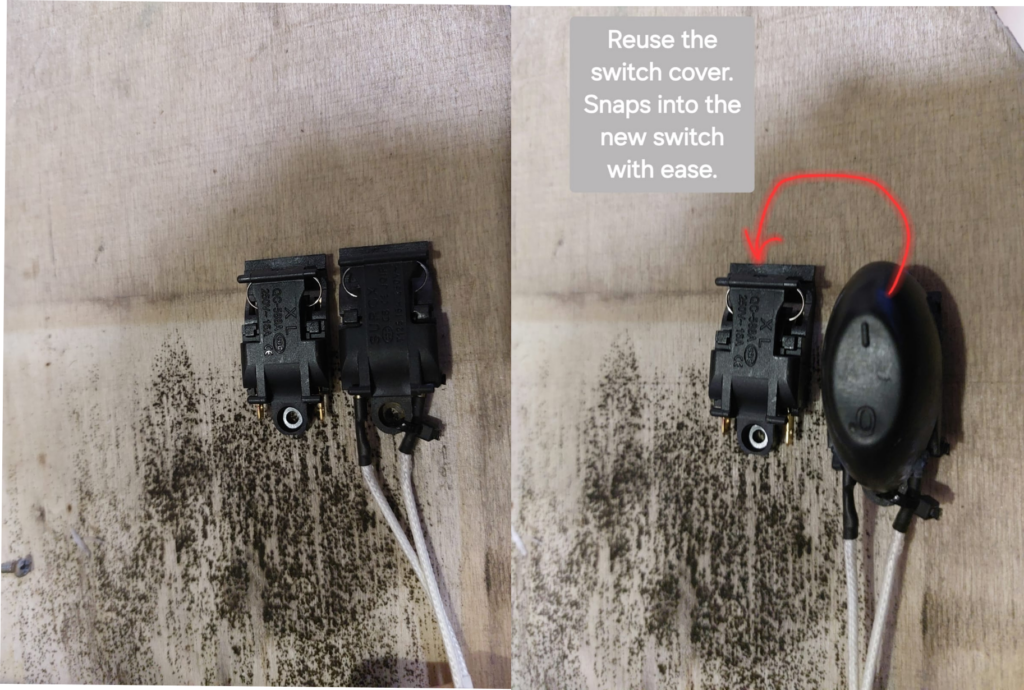
Two images stitched together showing the construction of a kettle switch and how to reuse Switch plastic cover

The switch had a simple construction and for only KSh 200, and a faulty kettle in the store, I was just too compelled to buy.

Place order: Electric Kettle Switch With Automatic Cut-off Protection (KES 200)

I also enjoy fixing things and there was really nothing much to lose trying to fix a dusty cheap kettle, long forgotten.
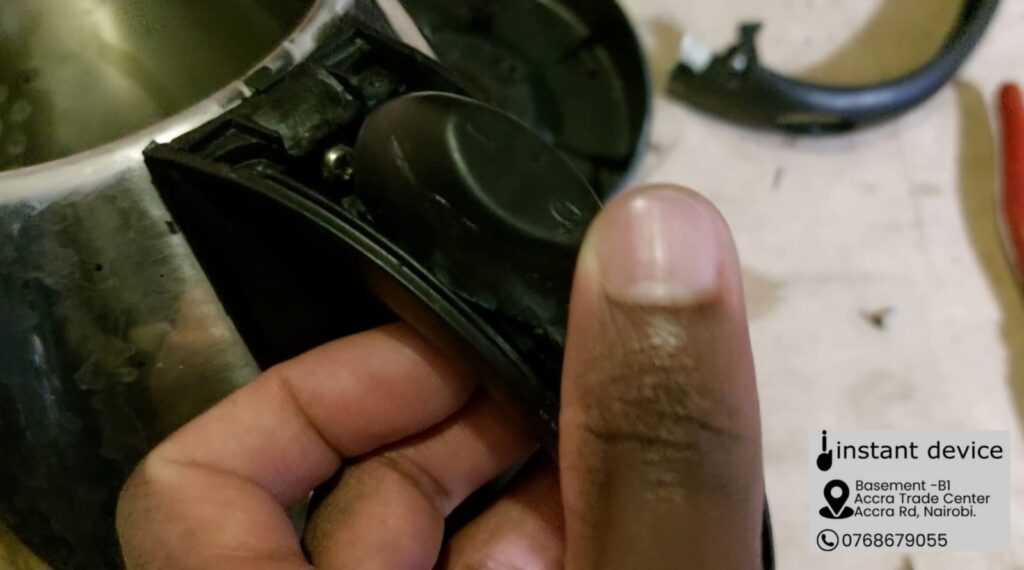
Exposed On/Off switch on a cordless electric kettle with the handle cover on the foreground.

So I, fished it out and opened it up. Removed the old switch and installed the new one.

And, voila! The kettle came back to life.

Perfect boil. No drama. No hesitation.

The last thing needed was a quick wash.

After doing the math, the total investment for this kettle came to Ksh 1,100. As earlier mentioned, I had spent Ksh 900 on the kettle plus the new switch.

Five months on and the kettle doesn’t skip a beat and in hindsight, I’m thrilled I didn’t throw it away.
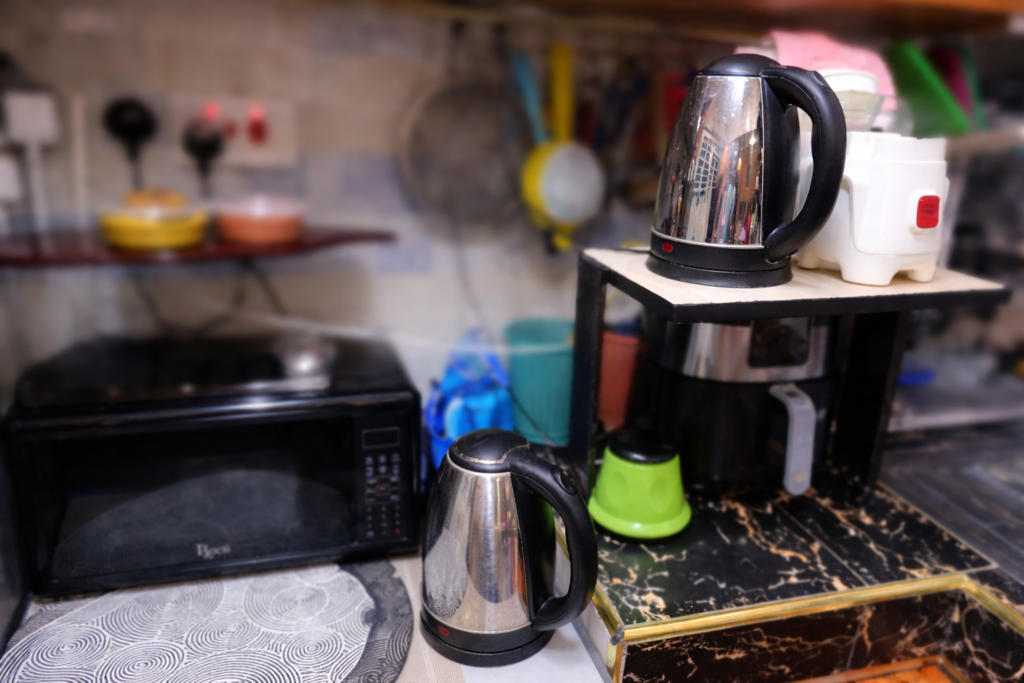
Cordless electric kettles in a home kitchen highlighting repairable household appliances

And yes, technically, I now have three kettles, because I later bought two more (which are working perfectly, by the way).

But the point here isn’t about how many kettles I own.

Sometimes It’s Just One Tiny Part

Most electric kettles that stop working after one or two boils are not “dead”.

In many cases:

  • The kettle switch is faulty
  • Everything else is perfectly fine
  • A simple Ksh 200 part can restore the appliance completely

This is especially true for:

  • Cheap China made kettles
  • Stainless steel, glass and plastic kettles
  • Generic / OEM models

Replacing the switch is not only affordable, but it’s also an easy DIY and much cheaper than buying a new kettle.

Always check the kettle switch first if your kettle;

  • Boiled once and stopped
  • Doesn’t click anymore
  • Has power but won’t heat
  • Randomly died after a short time

It’s one of the most common failure points, and one of the cheapest and easiest fixes.

Instant Device now stocks universal / OEM compatible electric kettle switches that work with most kettle models.

Why Replace Instead of Buying New?

  • Save money
  • Reduce electronic waste
  • Extend appliance life
  • Quick DIY or technician-friendly fix

Shop Location: Basement B1, Accra Trade Center, Accra Rd, Nairobi.

Call / WhatsApp: 0768 679 055.

Nationwide delivery available (Nairobi & upcountry).

Final Thought

That dusty kettle reminded me that sometimes, all an appliance needs is a tiny part, not a full replacement.

If I hadn’t tried that Ksh 200 switch, I would’ve written off a perfectly good kettle.

Don’t make the same mistake.

👉 Check the switch. Save the kettle. Save your money.
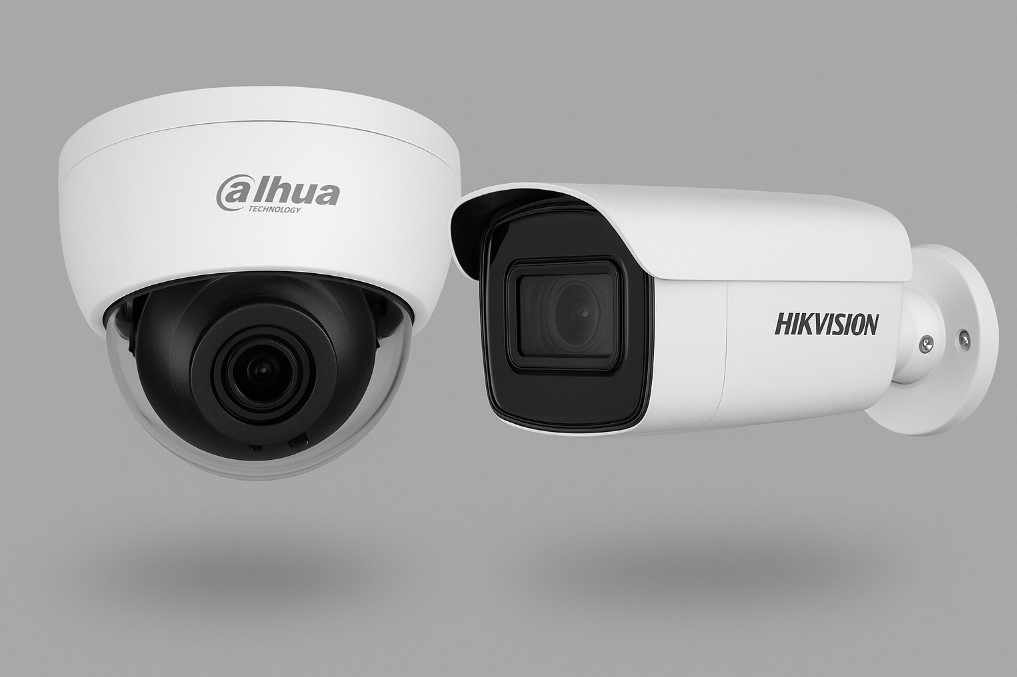
Dahua dome camera and Hikvision bullet camera side by side, representing CCTV and surveillance market growth in Kenya

Why CCTV is The Hottest Product In Kenya Today

In Nairobi right now, you’ll likely see a massive billboard or shop signs advertising Chinese surveillance brands on almost every street.

Dahua, HikVision, and other camera systems dominate the city skyline just as much as real estate cranes.

What you may not know is that this CCTV boom was created by the Chinese themselves.

Back in January 2017, while still working as a journalist, I visited Twyford Tiles, a newly established Chinese tile manufacturer in Kajiado, just off Namanga Road. The factory had launched the previous December, and I was tasked with exploring how it hoped to impact Kenya’s construction industry.

The visit, however, revealed something bigger than tiles. 

It showcased a management culture that has since become one of the strongest drivers of the surveillance equipment market in Kenya.

Chinese Companies and the CCTV Culture

Inside the factory, I noticed two things immediately:

  1. Language barriers with locals.
    Many Chinese managers struggled to communicate and often avoided direct engagement.
  2. Heavy reliance on CCTV systems.
    Surveillance cameras were everywhere, backed by large control rooms. Instead of relying on Kenyan foremen or lengthy confrontation, Chinese project managers in Kenya used CCTV to monitor, discipline, and even replace workers.

Misconduct, whether it was theft, ignoring safety rules, or unauthorized breaks, was swiftly handled through video evidence. 

No debates, no appeals.

Outside the gate, young Maasai morans waited to see if layoffs had opened new opportunities. 

It became clear, in Chinese-run projects, CCTV was the silent supervisor that shaped labor turnover.

Surveillance Demand in Chinese Construction Projects

Over the years, the Chinese footprint in Kenya has grown from highways to skyscrapers, from government-funded infrastructure to private real estate. 

Today, Nairobi’s morning matatus heading to Kilimani, Kileleshwa, and Westlands are packed with mjengo guys reporting to Chinese-funded sites.

For context, the story of Twyford Tiles in Kajiado is not just a personal observation but part of a broader narrative that has attracted international coverage. 

Outlets such as Caixin Global have documented how Chinese companies like Twyford have expanded into Africa, shaping industries from construction materials to large-scale infrastructure. 

Linking these developments to the surveillance culture on project sites shows just how intertwined Chinese investment and local market opportunities have become in Kenya.

But while the scale of these projects has provided thousands of jobs, managing large local workforces has remained a headache for Chinese managers who neither trust Kenyan foremen nor prefer direct confrontation. 

The solution? Surveillance cameras, everywhere.

  • Construction sites and factories now feature extensive CCTV systems.
  • Control rooms have become standard in new installations.
  • Investors overseas demand live video streams to verify progress and protect billion-shilling projects.

This approach has directly created a booming market for surveillance products in Kenya, especially among suppliers who understand the unique needs of Chinese clients.

Instant Device: Trusted Supplier of CCTV in Kenya

At Instant Device, we have positioned ourselves at the heart of this market by supplying Dahua and HikVision products in Kenya, two of the world’s most trusted CCTV brands and favorites of Chinese clients.

But our work goes beyond sales:

  • Surveillance Consultation & Troubleshooting
    We help identify loopholes such as blind spots and camera tampering, ensuring full coverage on construction sites.
  • After-Sales Service & Repairs
    Construction environments are tough on equipment. We coordinate repairs and maintenance with Dahua and HikVision service centers, keeping systems running without interruption.
  • Adaptability to Market Needs
    By understanding how Chinese contractors in Kenya operate, we deliver solutions tailored to their strict oversight and investor reporting requirements.

Conclusion

From a factory in Kajiado to the skyscrapers shaping Nairobi’s skyline, Chinese companies in Kenya have brought with them a management style deeply rooted in surveillance. 

This has fueled a steady demand for CCTV systems, making surveillance suppliers in Kenya an essential part of the construction ecosystem.

At Instant Device, we remain committed to meeting this demand by providing Dahua Kenya and HikVision Kenya solutions, backed with expert support and reliable after-sales service.

For Kenyan suppliers, this isn’t just business, it’s a long-term market created at the intersection of global investment, local labor, and the quiet authority of surveillance cameras.